Piano Pet: Cute Rhythm Game
- 4.7
- Rating
- 100.00K
- Installs
- Free
- Price

 Analysis by App-foxy
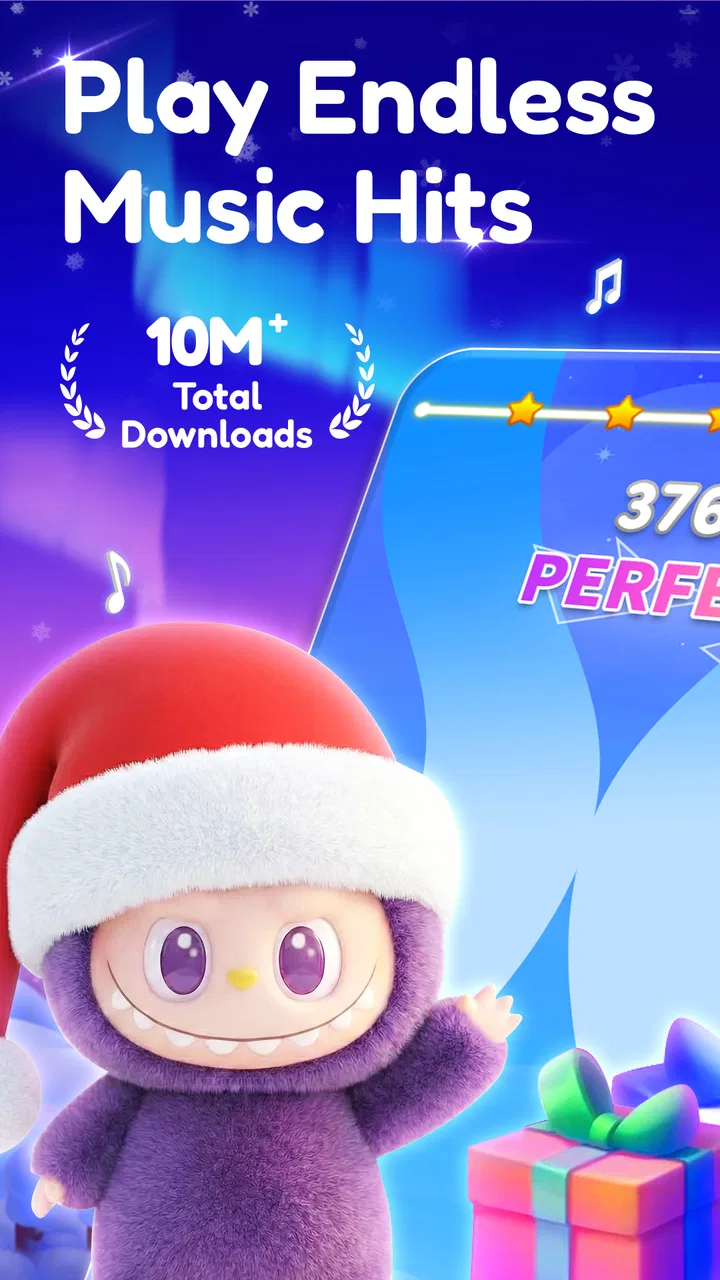
I spent time with Piano Pet: Cute Rhythm Game as a light music game, and my first impression was that it aims for quick, cheerful sessions rather than a deep rhythm-gaming challenge. The basic idea is easy to understand: guide a bouncing ball through beat-based stages while music plays, with a colorful presentation built around the “Piano Pet” identity. It is free to play, suitable for Everyone, and made by RhythmMix Studios.
That simple setup is also the game’s main appeal. I can open it when I have only a few minutes, start tapping without studying a complicated control system, and stop after a short attempt. The music focus gives it more personality than an ordinary endless-tapping game, while the ball movement adds a small timing challenge. It is not the sort of title I would choose when I want a full campaign, a large collection of systems, or a serious competitive ladder. I see it more as a casual rhythm toy with enough replay value to make repeated attempts enjoyable.
How the current version feels to play
The game belongs to the music category, but it is important to set expectations about what that means here. I am not playing a virtual piano or arranging songs note by note. The interaction is centered on tapping and jumping in time, so the satisfying moment comes from matching my input to the rhythm and keeping the ball moving cleanly through a stage. That makes the controls approachable for people who may find traditional rhythm games intimidating.
You May Also Like

 Blood Strike: 2.5 Anniversary
Blood Strike’s Loadouts Turn Every Drop Into a Tactical Gamble
A close look at Blood Strike’s custom loadouts: how fast access to signature weapons reshapes its battle royale rhythm, rewards preparation, and narrows the gap between fights.

 Pandora - Music & Podcasts
Pandora’s Music Is Easy to Start, but Harder to Recover
Pandora’s strength is its low-effort path from a seed to a station. Its weak spot is how much confidence it asks you to place in connection, setup, and quiet recovery.

 8 Ball Pool
 Is Built on Rivalries, Rematches, and Routine
A close look at the rivalries, rematches, shared routines, and unanswered safety questions that turn a quick pool match into a persistent mobile community.

 Samsung Music
’s Quiet Strength Is Playing What You Already Own
Its reach comes less from spectacle than from dependable access to a personal library. That simplicity is both the app’s strongest retention engine and its ceiling.

 AccuWeather: Weather Radar
AccuWeather Review: A Quick, Clear Forecast for Everyday Decisions
For everyday plans, the best forecast is the one you can understand quickly. AccuWeather makes rain timing, radar, and local conditions easy to act on, with a few trade-offs.

 Hill Climb Racing
Why Hill Climb Racing Still Turns Crashes Into One More Run
A tiny car, a bumpy hill and one more upgrade: Hill Climb Racing keeps resurfacing because its simple chaos makes every near-miss feel personal.
More From Our News Desk
View All News


On my first sessions, I found the learning curve gentle. The concept communicates itself quickly: listen, watch the movement, and tap with better timing. This is useful for younger players and for anyone who wants a game that can be understood without reading a long tutorial. The Everyone content rating also fits the friendly, accessible direction. Parents looking for a music-themed game for a child may find the premise easier to introduce than a more intense action title.
The music selection is presented around K-Pop, EDM, and hip-hop styles, which gives the experience a broader sound than a single-genre piano game. Those styles also support different moods. K-Pop can make a session feel bright and energetic, EDM suits repeated timing attempts, and hip-hop can give the tapping a more relaxed pulse. I would not treat the genre labels as a guarantee that every player will enjoy every track, but they do suggest that the game is trying to keep the soundtrack varied.
One practical strength is offline play. I can use it in places where I do not want to depend on a connection, such as a commute, a waiting room, or a short break away from home. That changes how I use it compared with many music games that are built around online events or constant content delivery. I can think of it as a small download-and-play option rather than a game that needs to become part of my daily online routine.
Why the tap-and-jump format works
The ball format creates a useful separation between listening and reacting. I am not simply pressing a button whenever a note appears; I am also watching the character’s path and judging the next moment. When I miss, the mistake feels connected to timing, visual attention, or both. That gives retries a clear purpose. I can slow down mentally, listen for the pulse, and try to make the next run cleaner.
A tip that helped me was to avoid staring only at the ball. The movement is important, but listening to the beat can make the timing feel less frantic. I also found it better to use a consistent tapping rhythm instead of reacting dramatically to every movement. This is a small distinction, but it matters in a game where visual effects can pull attention away from the music.
Another useful approach is to treat early attempts as practice rather than as a test of skill. I first focus on identifying where the stage changes pace or demands a quick response. On the next attempt, I concentrate on those sections instead of trying to improve everything at once. That workflow makes the game feel more deliberate and reduces the frustration that can come from repeating a level without learning anything from the previous run.
What the release and current version tell me
The game was released on March 16, 2026, and the current version is 1.2.0. Those details place it in an early stage of its product life, so I view the present experience as a starting point rather than a finished rhythm platform with years of accumulated content. The version number shows that RhythmMix Studios has already moved beyond the initial release, but it does not by itself tell me how extensive those changes are.
For someone installing it now, the important point is that the current build should be judged on its immediate playability: how quickly the tap-and-jump loop makes sense, how well the music supports the timing, and whether offline sessions fit the player’s routine. I would avoid assuming that future updates will add particular modes, songs, or progression systems. Those may be reasonable hopes for a music game, but they are not reasons I would use to recommend the current version.
The presence of over one hundred thousand installs suggests that the concept has reached a meaningful audience, even though the displayed average rating is 0.0. I would read that combination carefully rather than treating either figure as a complete verdict. Install activity indicates interest, while the rating figure does not give me a useful quality signal. My recommendation therefore comes from the game’s design and use case, not from relying on a community score.
Because the game is free, the barrier to trying it is low. That is especially helpful here because rhythm preferences are personal. A player can discover quickly whether the music, timing, and visual style feel comfortable without committing money first. The trade-off is that a free game may not offer the same depth or polish as a premium rhythm title, so I would approach it as a casual option rather than compare it directly with a large paid music game.
How existing players may experience the update path
Players who installed the game near launch may appreciate being on a version that has already progressed to 1.2.0, but I would keep expectations measured. The most sensible way to evaluate an update is to notice whether everyday play feels smoother or more convenient, rather than assuming that a version change automatically means a major expansion. If the core loop already worked for someone, the current build is likely to remain familiar because the central identity is still the rhythm ball format.
For returning players, I recommend revisiting the game with a specific goal. Try a previously difficult section while listening more closely to the beat, or use an offline session to see whether the game suits a new routine. This is more useful than simply opening it and expecting a completely different experience. The update path matters, but the game’s value still depends on whether short, repeated timing challenges are enjoyable to you.
New players should not feel pressured to master everything immediately. I would play a few sessions with the sound at a comfortable level and keep the device steady, because both audio and visual timing contribute to the experience. If taps feel inconsistent, I would first check my own timing and the way I am holding the device before deciding that the game is too difficult. A relaxed setup makes the rhythm easier to follow.
The minimum operating system is Android 7.0, which makes the compatibility range fairly broad for Android users with older devices. That is convenient if I want to use a spare phone for offline play. Still, operating-system compatibility does not guarantee identical performance on every handset. Screen response, speaker quality, and general device condition can all affect a timing game, so players with older hardware should judge the feel on their own device.
Where the game still leaves room for improvement
The biggest limitation is the narrowness of the central loop. Tapping and jumping to music can be satisfying, but players who want more than timing retries may soon look for additional variety. A traditional rhythm game may offer several input patterns, detailed difficulty settings, song practice tools, or a stronger sense of progression. A large arcade game may provide more visual variety and longer-term goals. Piano Pet is better suited to people who value immediacy over complexity.
The music focus also creates a personal risk. K-Pop, EDM, and hip-hop cover recognizable modern styles, but they will not automatically appeal to everyone. If your ideal music game depends on a carefully curated soundtrack in one specific genre, this may not match your taste. I would choose it for the play pattern first and treat the soundtrack range as a bonus, not as a substitute for a music library built around your favorite artists or songs.
Another trade-off is that offline play is excellent for convenience but can make the game feel self-contained. A player who enjoys leaderboards, social challenges, rotating events, or frequent online discoveries may prefer a connected alternative. Offline access is a real strength for travel and quick breaks, yet it also points toward a more private, individual experience. That is not a flaw for everyone; it simply defines the kind of engagement the game supports best.
The rating display also means I would not use the store score to settle doubts. With a 0.0 average shown, there is no meaningful numerical consensus for me to lean on. I would install it only if the free price, music styles, and simple ball-based controls sound appealing. In this case, a short personal trial is more informative than trying to interpret the rating.
I would also skip it if I need a game with a strong narrative, a substantial collection of unlockable systems, or a demanding skill ceiling. The cute presentation may attract players who want something lively, but visual charm alone will not satisfy someone searching for a serious instrument simulator or an advanced competitive rhythm experience. For those users, a specialized piano app or a deeper rhythm title would be a better choice.
Everyday situations where it makes sense
My favorite use case is a short waiting period. If I have a few minutes before an appointment, I can play one or two attempts, focus on a troublesome beat, and close the game without needing to remember a complicated story. The offline design makes this especially practical when I am trying to conserve attention or avoid depending on mobile service.
It can also work as a gentle introduction to rhythm games. I would hand it to someone who likes music but has little experience with timing-based controls, then let them learn through repetition. The ball gives the action a visible anchor, while the tap-and-jump idea is easier to explain than a multi-button control scheme. For a family setting, the Everyone rating supports that approachable role, although adults should still decide whether the music and pace suit the child using the device.
A less obvious use is listening practice. I can play with the aim of identifying the beat before worrying about a perfect run. This turns each attempt into a small exercise in anticipation. It is not a formal music lesson, and I would not present it as one, but the game can encourage players to notice pulse and timing in an entertaining way.
For commuting, I would use headphones if appropriate and keep the volume comfortable, because the music is part of the control experience rather than background decoration. If I cannot listen safely or clearly, the game loses some of its usefulness. In a noisy environment, visual concentration may not be enough to replace the audio cue, so this is one situation where a quiet room can produce a better experience than a crowded journey.
What I would watch as the game develops
Since the release is still recent and the current version is 1.2.0, I would watch for changes that improve long-term variety without making the simple controls harder to understand. More ways to practice difficult sections would be particularly valuable for a game built around repeated timing attempts. I would also welcome clearer separation between casual play and harder challenges, because that would let beginners enjoy the music while giving experienced players a reason to continue.
Soundtrack growth would be another meaningful area to follow. The existing genre direction gives the game a recognizable mood, but a wider selection could help players find tracks that suit their preferred pace. The best kind of expansion would preserve the quick offline appeal rather than turning every session into a requirement to connect, wait, or manage a large amount of extra content.
I would also pay attention to how RhythmMix Studios handles the balance between cute presentation and precise feedback. In a timing game, attractive effects should support the beat rather than obscure it. Any future refinement that makes successful taps feel clearer, without adding visual clutter, would improve the experience for both new and returning players.
My recommendation is straightforward: try it if you want a free, friendly music game for short offline sessions and enjoy the idea of guiding a ball through K-Pop, EDM, and hip-hop rhythms. I would not choose it as a replacement for a full piano app or a feature-heavy rhythm game. Its strongest qualities are accessibility, quick starts, and a low-pressure format; its main weakness is that the same simplicity may limit players who need deeper systems.
Overall, I see this as a pleasant casual option rather than a definitive music game. The current build gives RhythmMix Studios a workable foundation, and the tap-and-jump design is easy to recommend to beginners. Just go in expecting focused rhythm play, not a complete musical toolkit. If that distinction matches what you want from a free game, Piano Pet: Cute Rhythm Game is worth trying for yourself.
FAQs for Piano Pet: Cute Rhythm Game
01What is Piano Pet: Cute Rhythm Game about?
Piano Pet: Cute Rhythm Game is an engaging mobile app that combines rhythm-based gameplay with adorable pet characters. Players tap along to various tunes while interacting with their virtual pets, unlocking new songs and customization options as they progress. It's a delightful blend of music and pet care that appeals to all ages.
02Is Piano Pet: Cute Rhythm Game suitable for children?
Yes, Piano Pet: Cute Rhythm Game is designed with family-friendly content, making it suitable for children. The app features intuitive controls, colorful graphics, and a playful atmosphere. Parents can feel confident that the game provides a safe and entertaining experience for younger audiences while also helping improve their rhythm and coordination skills.
03Are there in-app purchases in Piano Pet: Cute Rhythm Game?
Piano Pet: Cute Rhythm Game offers in-app purchases that allow players to unlock additional content, such as new songs, pets, and customization items. While the game is free to download and play, these optional purchases can enhance the experience. Players can enjoy most features without spending money, but purchases can provide quicker access to exclusive content.
04Can I play Piano Pet: Cute Rhythm Game offline?
Piano Pet: Cute Rhythm Game requires an internet connection to download updates and access certain features. However, once the necessary content is downloaded, players can enjoy the game offline. This allows users to play and interact with their pets without needing a constant internet connection, making it great for travel or areas with limited connectivity.
05What platforms is Piano Pet: Cute Rhythm Game available on?
Piano Pet: Cute Rhythm Game is available on both Android and iOS platforms. Users can download it from the Google Play Store or the Apple App Store, ensuring compatibility with a wide range of devices. Whether you're using a smartphone or tablet, the game is optimized for smooth performance and enjoyable gameplay across different screen sizes.
Pros
- Adorable pet characters enhance engagement.
- Simple controls suitable for all ages.
- Variety of songs keeps gameplay fresh.
- Offline mode available for uninterrupted play.
- Regular updates introduce new features.
Cons
- Limited free songs without purchase.
- Occasional lag on older devices.
- Ads can interrupt gameplay experience.
- In-app purchases can be pricey.
- No multiplayer mode available yet.

Piano Pet: Cute Rhythm Game
Gallery